
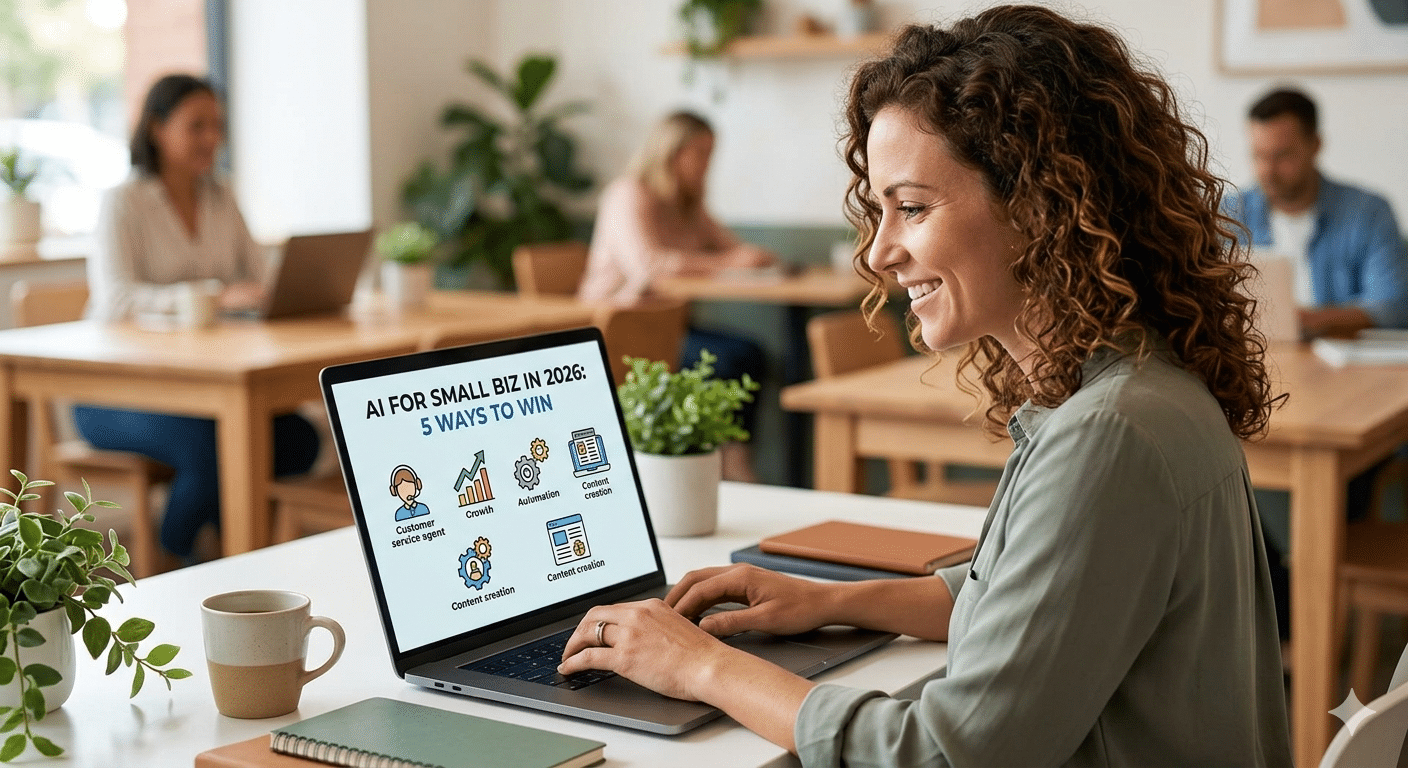
The landscape of small business has shifted. In 2026, Artificial Intelligence (AI) is no longer a futuristic “nice-to-have” reserved for Silicon Valley giants. It has become the great equalizer, allowing “Main Street” shops and boutique agencies to compete with multinational corporations.
Whether you are a solo entrepreneur or managing a team of twenty, integrating AI isn’t about replacing your human touch—it’s about amplifying it. Here are five practical, high-impact ways your small business can use AI effectively this year to drive growth, efficiency, and customer loyalty.
- Transform Customer Service with “Always-On” AI Agents
In 2026, customers don’t just want answers; they want them now. Modern AI agents have evolved far beyond the frustrating “I don’t understand” chatbots of the past.
Small businesses are now using Agentic AI—tools like Gladly or Salesforce Agentforce—to handle up to 80% of routine inquiries. These agents don’t just answer FAQs; they can check order statuses, process returns, and even recommend products based on a customer’s specific history.
Why it works:
- 24/7 Availability: Your “storefront” never sleeps, even if you do.
- Intelligent Triaging: AI handles the “where is my order?” tickets, freeing your human staff to handle complex, high-empathy situations.
- Personalization at Scale: Modern AI remembers a customer’s name and past preferences, making every interaction feel tailored.
- Hyper-Personalize Your Marketing Efforts
The era of “spray and pray” marketing is officially over. In 2026, small businesses are leveraging AI to deliver Predictive Marketing. Tools like HubSpot Breeze or Mailchimp’s AI Assistant analyze your first-party data to predict exactly when a customer is most likely to buy.
Instead of sending one generic newsletter to 5,000 people, AI allows you to segment your audience into micro-groups. You can send a discount code for hiking boots to the customer who just browsed your outdoor gear, exactly ten minutes after they left your site.
How to implement it:
- Predictive Send-Time Optimization: Let AI determine the best hour to hit an inbox for maximum open rates.
- Dynamic Website Content: Use AI to change your homepage banners based on whether a visitor is a returning customer or a first-time guest.
- Streamline Operations with Workflow Automation
Small business owners often wear too many hats. AI can now take over the “boring” administrative tasks that lead to burnout. By using “glue” tools like Zapier or Make, you can connect your different apps into a self-running ecosystem.
Imagine a world where:
- A lead fills out a form on your website.
- AI summarizes their request and adds it to your CRM.
- An automated, personalized follow-up email is drafted for your review.
- A task is created in Notion or Asana for your team.
All of this happens without you lifting a finger. This AI-augmented workforce model allows small teams to achieve the output of companies twice their size.
- Master Content Creation and SEO
Content is still king, but the volume required to stay relevant in 2026 is staggering. Small businesses are using Multimodal AI (tools that handle text, images, and video simultaneously) to maintain a consistent brand presence.
Tools like Jasper or Canva AI allow you to turn one idea into a week’s worth of content. A single blog post can be transformed into ten social media captions, a three-minute video script, and five Instagram graphics in minutes.
Pro-Tip for SEO: Don’t just use AI to write; use it to research. Tools like Perplexity or SurferSEO can identify “content gaps” in your niche, telling you exactly what questions your customers are asking so you can provide the best answers.
- Drive Smarter Decisions with Predictive Analytics
One of the biggest hurdles for small businesses has always been data—either having too little or not knowing what to do with what they have. In 2026, AI-powered financial tools can “forecast” your business’s future.
Apps like Tableau or AI-integrated versions of Xero can analyze your cash flow patterns to predict a lean month before it happens. They can also optimize your inventory, telling a retail store exactly how many units of a specific product to order based on upcoming local trends or historical peaks.
The Benefit:
- Reduced Waste: Don’t tie up your capital in stock that won’t sell.
- Proactive Financial Planning: Know when it’s the right time to hire or invest in new equipment.
Conclusion: Starting Small with AI
The key to using AI effectively isn’t to overhaul your entire business overnight. It’s to identify your biggest friction point.
Are you drowning in emails? Start with a customer service AI agent. Is your social media lagging? Try a generative content tool. By 2026, the businesses that thrive are the ones that view AI as a “co-pilot”—a tool that handles the mechanical so the humans can focus on the meaningful.